


Strengthening of the Pharmaceutical Sector in Senegal
The pharmaceutical sector in Senegal, is still in the early stages. Currently, Senegal imports over 90% of its medicines and nearly 99% of its vaccines. Despite this heavy reliance on imports, the country is making strategic moves to bolster its pharmaceutical industry, with a focus on achieving greater self-sufficiency in vaccine production. The government aims to locally produce one-third of its required pharmaceuticals by 2030, increasing to 50% by 2035, to reduce dependency and build a more robust healthcare infrastructure.
The project activities are funded and executed in coordination with the Deutsche Gesellschaft für Internationale Zusammenarbeit (GIZ) GmbH in the context of the SenPharm/SUNU MAV+ project to foster local pharmaceutical production in Senegal. Small and medium-sized enterprises (SMEs) form the foundation for sustain-able development, making their growth and strengthening crucial for the sector’s long-term success. As such, AGHA’s interventions are focused primarily on developing and supporting these SMEs within the pharmaceutical industry, notably through capacity strengthening in the areas of WHO-prequalification, Industrial Fire Safety and support in access to finance. The overarching goal of these initiatives is to develop and strengthen Senegal’s pharmaceutical sector, to achieve greater independence in healthcare and, eventually, to position Senegal as a significant exporter of pharmaceuticals in the region. By investing in local production capabilities and regulatory frameworks, Senegal aims to enhance its capacity to respond to health crises and contribute to global public health efforts.
We are grateful for the support of GIZ co-financed by the BMZ and the European Union, who made this project possible.

The project focuses on the following pillars:
1. Introductory Trainings and (in the long term) Mentoring on WHO-Pre-Qualification
Achieving WHO prequalification is a critical milestone for pharmaceutical manufacturers, as it enables them to meet international quality standards and gain access to global markets. Obtaining WHO prequalification is particularly important for expanding their reach and selling pharmaceutical products to international organizations, such as the Generics and Biosimilars Initiative (GaBI) and global health agencies. This certification not only enhances their reputation for quality but also ensures compliance with stringent regulatory requirements, thus enabling participation in global procurement programs led by organizations such as UNICEF, the Global Fund, and the President’s Malaria Initiative.
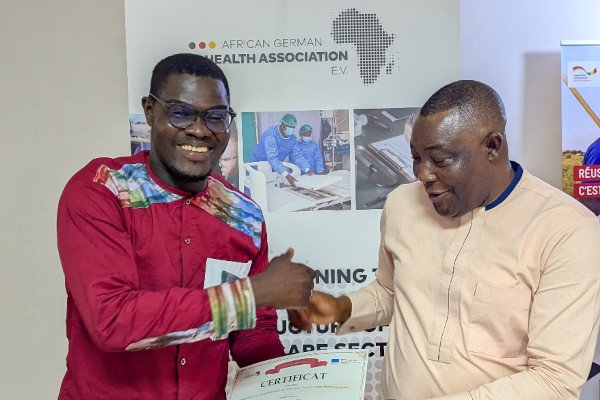
This work package includes comprehensive introductory training on WHO prequalification processes, tailored specifically for entities such as (potential) companies from the pharmaceutical sector interested in producing vaccines and medicines. Additionally, it will provide mentoring support to help participants navigate the complexities of the prequalification process, identify potential gaps in their current practices, and develop actionable plans to achieve WHO standards.
2. Access to Funds
Small and Medium Enterprises (SMEs) are the backbone of any economic sector, driving innovation, creating jobs, and significantly contributing to a country’s GDP. This is true not only in advanced economies but also in developing nations like Senegal. In Senegal, supporting SMEs, especially in the pharmaceutical industry, is crucial for public health, economic growth, and the overall well-being of the population. SMEs in this sector play a vital role in the production and distribution of essential medicines, ensuring that vital medications are accessible to all segments of society, including the most vulnerable.
However, one of the major challenges faced by both public and private stake-holders in Senegal, including SMEs in the pharmaceutical sector, is access to finance. Limited financial resources can hinder the ability of these enterprises to innovate, expand, and improve their services. To address this challenge, AGHA will use its network and expertise to facilitate possible cooperation between Senegalese pharmaceutical producers and local as well as international stakeholders (such as investors, banks, funds, and export credit agencies) to enable access to financing solutions.
3. Planning and Networking Assistance for CPHI Frankfurt 2025
The work package aims to facilitate the participation of Senegalese pharmaceutical SMEs in CPHI, one of the largest international trade fairs for the pharmaceutical industry, taking place from 28–30 October 2025 in Frankfurt, Germany. Organized by SenPharm and the local GIZ office in Senegal, this delegation trip will provide a unique opportunity for SMEs to network with global industry leaders, explore potential partnerships, and gain insights into the latest industry trends and innovations.
To maximize the benefits of attending CPHI, we will offer tailored assistance to help SMEs engage with companies, organizations, and other participants that align with their specific interests and needs. A one-pager will be prepared for each company, which can be used to present their profile. Following this, AGHA will assist the SMEs in arranging appointments at CPHI. Additionally, during the event, an AGHA expert will be on-site to support the delegation, ensuring they make the most of their participation and networking opportunities. SMEs that do not attend CPHI will also be supported by AGHA in the preparation of a company fact sheet (one-pager), which can be shared with potential collaboration partners for financing or other purposes.
4. Fire Hazard Assessment and Capacity Building
Fire safety is a critical component of risk management for pharmaceutical manufacturers, particularly for Senegalese SMEs striving to meet international quality and safety standards. Fire hazards in pharmaceutical production facilities pose significant risks to personnel, equipment, and critical supplies, potentially disrupting production and leading to severe financial and reputational losses. Compliance with fire safety regulations is not only a fundamental requirement for workplace safety but also an essential aspect of achieving and maintaining international certifications, such as WHO prequalification and Good Manufacturing Practice (GMP).
However, many local pharmaceutical SMEs in Senegal lack the necessary expertise, resources, and infrastructure to implement comprehensive fire prevention and response measures. Without a systematic approach to fire hazard assessment, companies may operate with unrecognized risks, inadequate fire protection systems, and insufficient emergency preparedness. The absence of well-defined fire safety protocols can jeopardize the entire supply chain, impacting both local and international stakeholders.
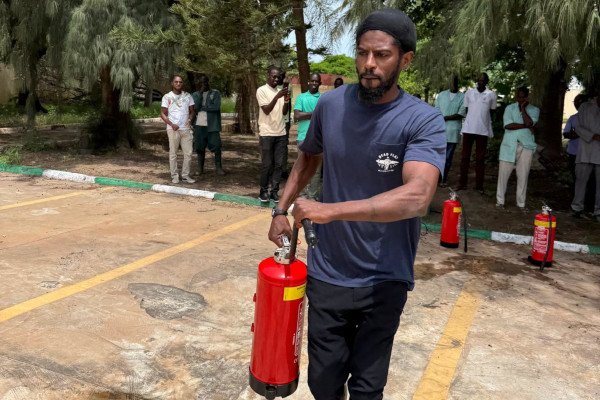
This work package is structured into three main areas, with Senegalese SMEs from the pharmaceutical sector as the target group. First, individual assessments will be conducted in each company, followed by training for staff at different levels. In the third part, relevant fire protection and training equipment identified by the experts will be procured for the companies from a dedicated project budget.
5. Pharma Equipment Management and Maintenance
Reliable production equipment is essential for pharmaceutical manufacturers to ensure product quality, regulatory compliance, production efficiency, and business continuity. However, many pharmaceutical companies continue to face challenges related to equipment maintenance, preventive maintenance, documentation, and technical capacity, resulting in unnecessary downtime, increased operating costs, and reduced productivity.
This work package supports Senegalese pharmaceutical manufacturers through practical training and tailored on-site mentoring on equipment management and maintenance. The programme covers equipment lifecycle management, preventive and corrective maintenance, inventory and workshop management, calibration records, documentation, staff qualifications, and digital asset management solutions.
Participants will learn how to establish structured maintenance systems, improve equipment availability, and implement practical tools such as QR-based equipment identification. Following the training, selected pharmaceutical manufacturers will receive individual on-site mentoring by AGHA experts, including practical maintenance coaching, assessment of defective equipment, recommendations for repairs, and support in implementing inventory systems and digital maintenance solutions.
Do you have questions about the African German Health Association or our projects?
SenPharm/SUNU MAV+
The GIZ project ‘SenPharm/SUNU MAV+’, commissioned by the BMZ and co-financed by the European Union (MAV+ Initiative) has the overall objective of strengthening the institutional capacities of Senegalese public and private sector actors to contribute to the sovereignty in the production of vaccines and pharmaceutical products by 2026.
To achieve these objectives, the project has established four main areas of intervention:
- Governance of the sector, with the main partner being the project management unit of the Ministry of Health and Social Action (MSAS), known as the UGP – Pharma, responsible for reviving the pharmaceutical industry.
- Regulation of the pharmaceutical sector, with the main partner being the Senegalese Pharmaceutical Regulatory Agency (ARP), established in June 2022.
- Production, with the main partners being local pharmaceutical industries, including the Pasteur Institute of Dakar (IPD), which is the only manufacturer of yellow fever vaccines in Africa.
- Skills Development and Training with the main partner being the Ministry of Vocational Education and the Ministry of Higher Education and research
For more information, visit:
Expanding the local vaccine and pharmaceutical industry in Senegal | GIZ
About the Deutsche Gesellschaft für Internationale Zusammenarbeit
(abbreviated GIZ) (German Society for International Cooperation)
As a provider of international cooperation services for sustainable development and international education work, GIZ is dedicated to building a future worth living around the world. GIZ has over 50 years of experience in a wide variety of areas, categorised into three priority areas: Sustainable Economic Development, Training and Employment; Energy and Climate (specifically renewable energy and energy efficiency); and Peaceful and Inclusive Societies (good governance). The diverse expertise of our federal enterprise is in demand around the globe, with the German Government, European Union institutions, the United Nations, the private sector, and governments of other countries all benefiting from our services. We work with businesses, civil society actors, and research institutions, to foster successful interaction between development policy and other policy fields and areas of activity. The German Federal Ministry for Economic Cooperation and Development (BMZ) is our main commissioning party.
For more information, visit:
www.giz.de/senegal